Driveway Paving Contractor in Arizona (Residential and Commercial)

At APS Chip Sealing & Asphalt Paving, we help homeowners and property managers across Arizona plan and build driveways that look clean, drain correctly, and feel solid under everyday use. If you’re searching for a driveway paving contractor, our approach is simple: we evaluate how your driveway is used, how water moves across it, and what the base is doing underneath, then we recommend the most practical path forward.

We handle both residential driveway paving and commercial driveway paving, and we keep the conversation straightforward, so you’re not guessing about scope, timing, or what you’re paying for.
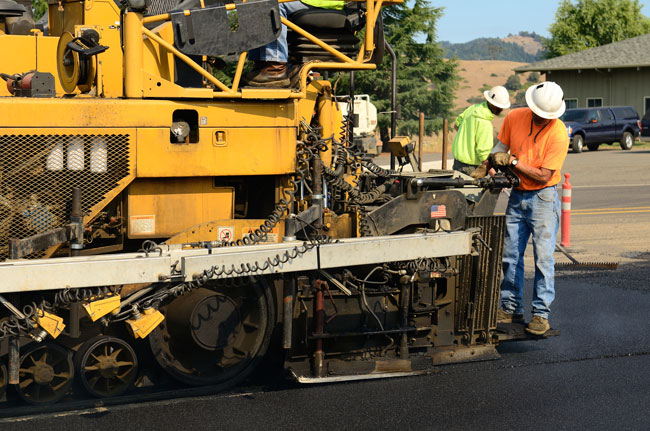
Gallery of services - Before - After

What a driveway paving contractor should evaluate first

A driveway can look “fine” at a glance and still have issues underneath. Before any asphalt goes down, a contractor should look at the things that determine whether your driveway will perform long-term.

Key items to evaluate on an Arizona driveway:

  • Drainage and slope: where water currently goes during heavy rain, and where it should go.
  • Base condition: whether the base feels stable or has soft areas, pumping, or movement.
  • Edge support: driveway edges are a common failure point if they are not built and supported correctly.
  • Transitions and tie-ins: garage entry, street tie-in, gates, and sidewalks.
  • Use and load: daily vehicles, delivery trucks, trash trucks, commercial traffic, and turning patterns.

When these factors are handled up front, the finished driveway looks better and performs better.

When we visit your driveway, we pay close attention to:

Drainage and slope

Where does water go during heavy rain, and where does it collect?

Base stability

Are there soft areas or movement that could show back up later?

Edges

Driveway edges are a common failure point if they’re not supported.

Transitions

Garage entries, street tie-ins, and gate areas need clean, smooth transitions.

Use and load

A residential driveway and a commercial driveway are not built to the same demands.

We find that when these items are handled up front, the finished driveway looks better and performs better.

Want a driveway quote that actually reflects your driveway conditions?

Driveway paving options (how we help you choose)

Most people call us because they don’t want to waste money on the wrong option. Some driveways need targeted correction, some benefit from a new top surface, and some need a full rebuild. Our job is to explain what we’re seeing on your driveway in plain language, and then match the solution to your driveway’s condition and usage.
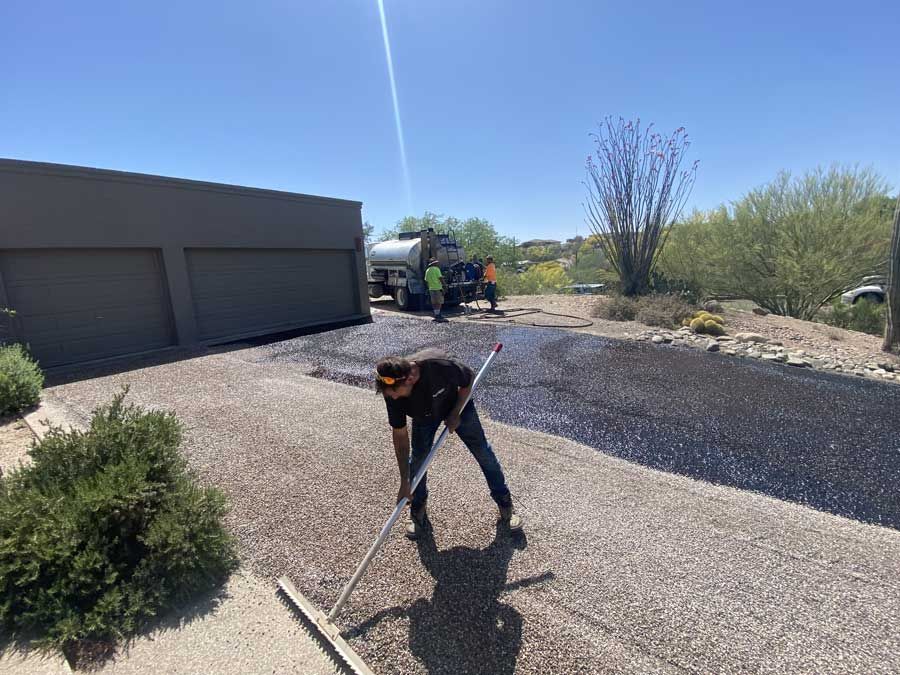
asphalt contractors

Option 1: Localized driveway correction

If most of your driveway is still performing well but a few areas are failing, localized correction can be a practical approach. In these cases, we focus on the problem zones, correct the underlying issues where needed, and blend the finished work so the driveway surface feels consistent.

This is often a fit when:

  • A driveway has isolated low spots or rough patches
  • Driveway edges are breaking down
  • Water collects in a few predictable areas

Option 2: Driveway overlay (a new asphalt layer)

An overlay can make sense when the driveway surface is worn but the underlying structure is still stable. We’ll still address drainage and any unstable spots first, because an overlay is not a shortcut for underlying movement. Done correctly, a driveway overlay renews the look and smoothness of the driveway while keeping the project efficient.

Overlay is commonly considered when:

  • The driveway has widespread surface aging
  • The driveway looks tired or uneven in texture
  • The driveway feels generally stable under traffic

Option 3: Driveway removal and replacement

When the base is no longer reliable, a full driveway replacement can be the most cost-effective path long-term. We don’t recommend replacement unless it’s justified, but when a driveway is structurally compromised, rebuilding it correctly can prevent repeat problems.

Replacement is typically recommended when:

  • The driveway shows wide areas of movement
  • The driveway has ongoing drainage issues affecting the structure
  • The driveway has large areas that keep breaking down

Not sure which driveway option fits your property?

Why drainage matters so much on Arizona driveways

In Arizona, a driveway that doesn’t drain correctly can deteriorate faster than you’d expect. Monsoon storms can deliver heavy water quickly, and if that water sits on the driveway or runs under edges, it can weaken the base and create soft areas. That’s why drainage and grading are part of how we think about driveway paving, not an afterthought.

In our driveway evaluations, we look for common issues like downspouts dumping onto the driveway, landscape grading pushing water toward the driveway, and low spots where water consistently pools. Then we plan how the finished driveway should shed water so it leaves the surface quickly and predictably.

Common driveway drainage problems we address include:

Water flowing from the street into the driveway

We see this a lot in Arizona neighborhoods where street runoff naturally heads toward the lowest point. If water is consistently pushed onto the driveway, we look at slope and transition points so the finished driveway sheds water away instead of pulling it in.

Downspouts discharging onto the driveway

When roof drainage lands directly on the driveway, it can keep the surface wet longer and concentrate runoff in one spot. We’ll call out those discharge points and factor them into the driveway plan so water exits the driveway quickly and predictably.

Puddling in low areas

Low spots usually mean the driveway isn’t shedding water the way it should. During our driveway evaluation, we identify where water sits after rain and plan the grading and surface profile so the driveway drains cleanly.

Runoff from landscaping or irrigation zones

Landscaping and irrigation often push water toward the driveway without anyone realizing it. We look at bordering grades and wet areas near the driveway edge, then plan a driveway surface that keeps water from lingering along the edges or flowing back onto the driveway.

Residential driveway paving in Arizona

For residential properties, a driveway is about more than access. It affects daily routine, curb appeal, and how your home feels when you pull in. At APS, our residential driveway paving projects focus on clean lines, smooth transitions at the garage and street, and a surface that feels stable under normal household traffic.

We also try to keep the process predictable. We explain what will happen, what you’ll need to move or prep, and how to plan for temporary access changes. If you’ve ever dealt with a contractor who leaves you guessing, you’ll appreciate how we manage a driveway project.

What the residential driveway process usually looks like

We try to keep residential driveway paving predictable. Below is the general flow we follow on most residential driveway projects.

01

Site review and measurements

We start by walking the full driveway with you and measuring the areas being paved. We also look at where the driveway meets the garage, the street, and any gates or sidewalks, because clean tie-ins are what make a finished driveway feel “right.” If water has a habit of moving across the driveway during storms, we note that early so the driveway plan supports proper drainage.

02

Surface removal or preparation (based on driveway condition)

Some residential driveways need full removal of the existing surface, and others can be prepared without full removal. Either way, we focus on giving the new driveway surface a consistent foundation so it looks even and feels stable under daily use. We’ll explain which approach we’re using on your driveway and why, so the scope is clear.

03

Base correction and grading (especially where drainage is a concern)

This is the part that most homeowners never see, but it often determines how the driveway performs. We address low spots, adjust grade where needed, and make sure the driveway has a clean path for water to leave the surface. On residential driveways, we also pay attention to driveway edges and any areas that take turning traffic, because those are common stress points.

04

Asphalt installation and compaction

Once the driveway is ready, we place the asphalt and compact it to create a smooth, tight surface. Compaction matters because it affects how the driveway feels under tires and how well the surface holds its shape. We also pay attention to the details that homeowners notice immediately, like the driveway’s visual finish, consistent thickness, and clean transitions.

05

Final detailing (edges, transitions, cleanup)

We finish by tightening up the edges, smoothing transitions at the garage and street, and making sure the driveway looks clean when we leave. This is also when we walk the driveway with you so you can see the final result and understand any short-term usage guidance for your specific driveway.

Residential driveway prep tips

A little prep helps your driveway project move faster and keeps access issues from becoming headaches.

Plan where vehicles will park during work If your garage or driveway is your main parking area, plan a temporary spot on the street or nearby. We’ll help you understand when driveway access may be limited so you can plan around it.

Clear the driveway of movable items Trash bins, planters, basketball hoops, trailers, and vehicles should be moved before work starts. A clear driveway helps us keep the project efficient and helps the finished driveway lines look clean.

Point out irrigation areas or zones that stay wet near the driveway If sprinklers hit the driveway edge or there are areas that stay damp, tell us. Water near driveway edges can affect how the driveway area behaves, so it’s helpful to flag those zones during the walkthrough.

Confirm gate access for equipment If your driveway passes through a gate, we’ll need to confirm clearance for equipment. This avoids surprises on install day and keeps the driveway schedule on track.

If you want a residential driveway plan that’s easy to understand, we can help.

Commercial driveway paving in Arizona

For commercial properties, the driveway isn’t just an entry. It affects traffic flow, deliveries, tenant experience, and safety. Commercial driveway paving also has different load demands, especially in turning zones, delivery lanes, and areas where vehicles stop and start.

At APS, we approach commercial driveway paving with planning first. We talk through access, phasing, and timing so your property can keep operating while work is happening. We also look at how vehicles actually move through the driveway, not just how the driveway looks on a drawing.

Asphalt parking lot with repaired asphalt by APS Chipsealing and Asphalt Paving in Tucson, Arizona

Phasing and access (so business can continue)

Commercial driveway paving can’t be treated like a residential driveway project, because your property still needs to function while work is happening. At APS, we plan commercial driveway work around real-world constraints like customer flow, tenant access, delivery schedules, and safety. The goal is to keep the site moving in a controlled way so you’re not forced into a full shutdown just to improve your driveway.

Below is how we typically think about phasing and access on a commercial driveway.

Keep at least one driveway entrance available when possible

We look at how vehicles enter and exit today, then build a phased approach that keeps at least one driveway access point usable whenever the site allows. If your property has multiple driveways, we can often alternate work zones so customers, residents, and staff still have a clear way in and out.

Redirect traffic safely with clear temporary signage

A commercial driveway needs clear direction while work is underway. We plan temporary routing so drivers aren’t guessing, backing up unexpectedly, or cutting through areas that are being worked on. That often includes simple, visible signage and obvious lane guidance so traffic stays predictable and safe.

Schedule work around peak traffic windows when feasible

If your driveway sees rush windows (morning arrivals, lunch traffic, school pickup, weekend spikes), we factor that into the schedule. When it makes sense, we’ll plan the highest-impact portions of the driveway work for lower-traffic periods so the site stays functional and the experience for customers or tenants stays smoother.

Maintain delivery and emergency access

Commercial properties often rely on scheduled deliveries, service vehicles, and trash routes, and you always need a plan for emergency access. During the planning phase, we identify the driveway zones that must remain open and coordinate phasing so the site can keep operating without compromising essential access.

Safety and smooth transitions

A commercial driveway with rough transitions or ponding water can create avoidable issues. Our goal is a driveway that drains correctly and provides smooth, predictable movement for vehicles and pedestrians.

Need commercial driveway work planned around your operating hours?

What affects driveway paving cost (and how we keep it clear)

We’re careful with pricing conversations because driveways vary widely. Instead of giving a generic number that doesn’t match reality, we explain what drives scope and cost for your specific driveway. That helps you compare options and avoid surprises.

Common driveway cost drivers in Arizona include:

Removal vs. surface preparation

Every driveway starts with an honest look at what’s already there. Some driveways need a full tear-out to get a clean, stable starting point, while others can be prepared without complete removal. At APS, we explain what we’re seeing on your driveway and why that prep approach makes sense, because the prep work is what sets the tone for how the finished driveway will look and feel.

Base condition and driveway stability

A driveway surface can only perform as well as what’s underneath it. We look for soft areas, movement, and spots that don’t feel consistent under load, then plan the right level of base work for your driveway’s use. This is especially important when a driveway sees heavier traffic patterns, tighter turns, or repeated stopping and starting.

Drainage corrections and grading

In Arizona, driveway drainage isn’t a nice-to-have. If water doesn’t have a clean path off the driveway, it can create low spots and undermine the driveway’s long-term performance. We evaluate how water moves today and shape the finished driveway so it sheds water quickly and predictably.

Access and equipment logistics

Driveway paving is also a logistics project. We consider driveway width, gate clearance, street access, and staging space for equipment so the work can be completed efficiently and safely. For commercial driveways, we also factor in tenant/customer flow so access stays organized while work is underway.

Residential vs. commercial driveway traffic demands

A residential driveway and a commercial driveway are built for different loads and patterns. We plan thickness, transitions, and the overall driveway design based on how the driveway is actually used, not just what looks good on day one. This helps the driveway feel stable and consistent whether it’s a home driveway or a high-traffic commercial entry.

Transitions, tie-ins, and edge detailing

The details are what make a driveway feel finished. We pay close attention to garage entries, street tie-ins, gate areas, and driveway edges so the surface is smooth, clean, and visually consistent. If you want a driveway estimate that reflects these real-world details, we’re happy to walk the driveway with you and talk through the plan.

Safety and smooth transitions

A commercial driveway with rough transitions or ponding water can create avoidable issues. Our goal is a driveway that drains correctly and provides smooth, predictable movement for vehicles and pedestrians.

Why Choose APS for Driveway Paving in Arizona?

At APS Chip Sealing & Asphalt Paving, we focus on driveways that look clean, drain correctly, and feel solid under everyday use. If you’re comparing driveway paving contractors, the difference is usually not the surface you can see, but the planning underneath it. We take the time to evaluate driveway slope, water flow, base stability, edges, and transitions, then recommend a driveway approach that makes sense for your property.

We work on both residential driveways and commercial driveways across Arizona, including the Tucson and Phoenix areas. Whether your goal is a smoother driveway entry at home or a commercial driveway that supports traffic flow and deliveries, our process stays straightforward: clear scope, clean workmanship, and a driveway that performs the way it should in Arizona conditions.

Call us today!

If you want a clear plan for a residential or commercial driveway, call us. We’ll ask a few quick questions, then help you figure out the most practical next step for your driveway.

TOP