If your asphalt driveway is worn or starting to deteriorate, resurfacing may be an option before full replacement becomes necessary. Driveway resurfacing adds a new asphalt surface over the existing pavement, while replacement involves removing the old driveway and starting over.
The right choice depends on what is happening below the surface. If the existing pavement and base are still stable, an overlay may be enough. If there is widespread cracking, movement, drainage damage, or base failure, replacement may make more sense.
What Is Driveway Resurfacing?
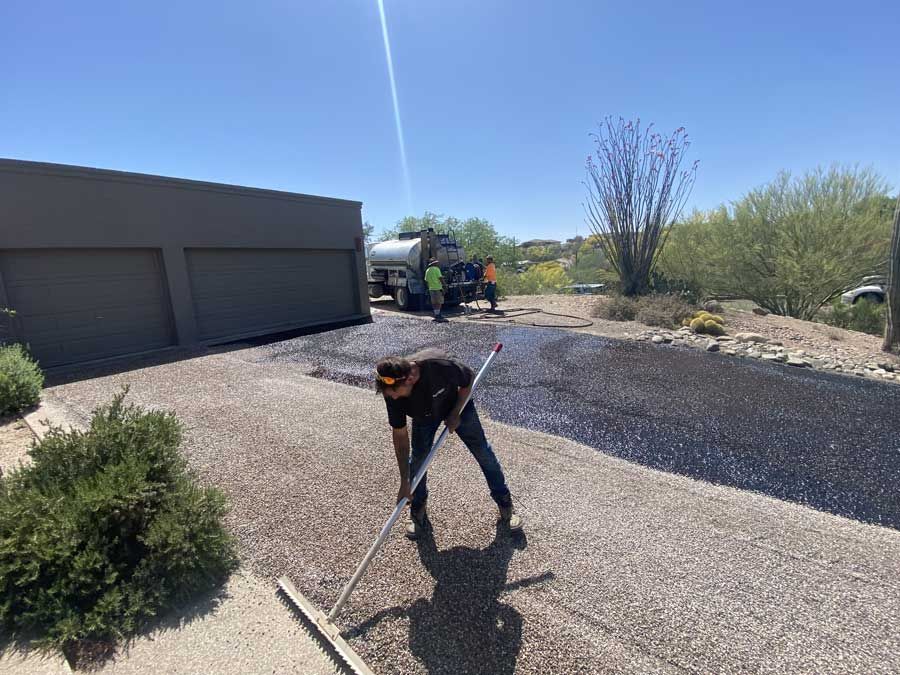
Driveway resurfacing, also called an asphalt overlay, involves placing a new layer of asphalt over an existing driveway. Before the overlay is installed, the existing surface needs to be evaluated and any areas that require preparation or repair should be addressed.
Resurfacing works best when the driveway is showing surface wear but still has a stable foundation underneath. It can provide a new driving surface without the additional work involved in removing and rebuilding the entire driveway.
APS provides driveway paving services in Tucson, Phoenix, and surrounding areas, including overlays and full driveway replacement.
When Driveway Resurfacing May Be a Good Option
Resurfacing may make sense when most of the existing driveway is still structurally sound and the problems are mainly affecting the surface.
Some signs that an overlay may be worth considering include:
- Surface wear across much of the driveway.
- Aging asphalt that has become rough or faded.
- Minor cracking that has not developed into widespread pavement failure.
- A driveway that needs a new surface but does not have major base or drainage problems.
- Previous repairs that are still stable and are not continuing to move or fail.
An inspection is important because the surface does not always show what is happening underneath. Covering a driveway with a new layer of asphalt will not correct an unstable base or an ongoing drainage problem.
When Driveway Replacement May Make More Sense
There are times when resurfacing would only cover up a larger problem. If the pavement or base has deteriorated too far, removing the existing driveway may be the better long-term option.
Replacement may be worth considering when:
- Large sections of the driveway are cracking, sinking, or breaking apart.
- The pavement moves or feels unstable in multiple areas.
- Water or drainage problems have caused repeated damage.
- The base underneath the asphalt needs to be corrected.
- Previous patches or repairs continue to fail.
Removing the existing pavement gives the contractor an opportunity to address grading, drainage, and base problems before the new driveway is installed.
What If Only Part of the Driveway Is Damaged?
A driveway does not always need to be resurfaced or completely replaced just because one section has failed.
If the damage is limited to a smaller area and the rest of the pavement is still in good condition, a targeted repair may be the better option. Potholes, broken edges, isolated cracking, or a failed section can sometimes be repaired without paving the entire driveway.
APS also provides asphalt repair and maintenance for localized pavement problems. The condition of the surrounding asphalt and the base underneath the damaged area will help determine whether a repair is enough or a larger project should be considered.
How Much Does Driveway Resurfacing Cost?
There is no single price that applies to every driveway resurfacing project. The cost depends on the size and layout of the driveway, the condition of the existing asphalt, how much preparation is required, and whether there are drainage, grading, or base issues that need attention first.
Access to the property can also affect the project. Gates, narrow entrances, nearby structures, and other site conditions may change how equipment and materials can reach the driveway.
Resurfacing and full replacement also involve different amounts of work. An overlay can avoid removing the entire existing driveway when the pavement underneath is still suitable, while replacement requires removal and additional preparation before the new asphalt is installed.
APS provides free estimates so we can look at the driveway and recommend an option based on its actual condition rather than giving you a generic price that may not apply to your property.
Is Resurfacing Always Less Expensive Than Replacement?
Resurfacing generally involves less work than removing and rebuilding an entire driveway, but that does not mean it is always the right choice.
Installing an overlay over pavement with serious base, drainage, or structural problems can leave the underlying issue unresolved. If the new surface begins failing because of those problems, the money spent on resurfacing may not provide the value you expected.
That is why the condition of the existing driveway matters just as much as the initial project cost. Sometimes resurfacing is the practical choice. In other situations, doing the additional work involved in replacement can make more sense.
How Long Does a Resurfaced Driveway Last?
There is no universal lifespan for a resurfaced driveway. How well it holds up depends on the condition of the pavement and base underneath it, the preparation before the overlay is installed, drainage, traffic, Arizona weather, and how the driveway is maintained.
An overlay installed over a stable driveway will generally have a better chance of performing well than one placed over pavement that is already moving or failing.
At APS, we take the time to evaluate the existing driveway before recommending resurfacing. Our goal is not simply to cover the old surface. We want to determine whether an overlay is appropriate for the property and complete the preparation and paving correctly so the finished work can hold up as well as possible over time.
Resurfacing vs. Replacement: How Do You Decide?
The biggest question is not simply how old the driveway is. It is how much of the pavement is failing and why.
Resurfacing may be appropriate when the existing driveway and base remain stable and most of the deterioration is at the surface.
Replacement may be the better option when damage is widespread, the base is unstable, drainage problems continue causing failures, or previous repairs are no longer holding up.
And when only one portion of the driveway is damaged, neither option may be necessary. A localized repair could be enough.
The easiest way to make that decision is to have the pavement looked at in person.
Get a Driveway Paving Estimate in Tucson or Phoenix
APS Chipsealing & Asphalt Paving provides driveway resurfacing, asphalt overlays, removal and replacement, and new driveway paving in Tucson, Phoenix, and surrounding Arizona communities.
We’ll look at the condition of the existing driveway, explain the options, and recommend the work that makes sense for the property.
Contact APS today to schedule a free driveway paving estimate.