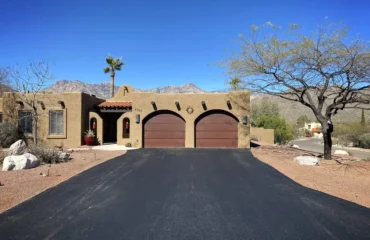
A chip seal driveway is a paved surface created by applying an asphalt binder and a layer of crushed stone aggregate. The materials are rolled together to produce a textured finish that can provide a practical alternative to traditional asphalt paving for certain residential properties. Chip sealing is particularly worth considering for long driveways, rural homes, and private roads where appearance, surface conditions, and budget all influence the decision.
For homeowners in Tucson, Phoenix, and surrounding Arizona communities, chip sealing can offer a durable, natural-looking surface when properly installed over a suitable foundation. However, it isn’t the right choice for every driveway.
Understanding how the process works, what it costs, and how it compares with other paving methods can help you decide whether a chip seal driveway is appropriate for your property.
What Is a Chip Seal Driveway?
Chip sealing, sometimes called chipsealing or chip and seal, is a paving treatment that combines asphalt binder with crushed stone aggregate.
Unlike traditional hot-mix asphalt, which combines its ingredients before installation, chip sealing applies the binder and stone in separate steps. The aggregate is then rolled into the binder to create a protective wearing surface.
The finished driveway has a visible stone texture rather than the relatively smooth, uniform appearance of conventional asphalt pavement.
Chip sealing is commonly used to preserve suitable existing pavement. It may also be incorporated into certain driveway and private-road construction projects when the underlying base has been properly prepared.
The condition of that foundation is essential. Chip sealing does not replace the structural support required for a stable driveway.
How Is a Chip Seal Driveway Installed?
Professional chip sealing involves several stages. The exact materials, equipment, and preparation requirements depend on the existing surface and project specifications.
1. Driveway Evaluation and Preparation
Before installation, a contractor evaluates the driveway’s condition, drainage, and supporting base.
Existing asphalt may need cleaning, crack treatment, or localized repairs. Projects involving gravel or aggregate bases may require additional grading, shaping, and compaction.
Problems with drainage or structural support should be addressed before the chip seal is applied.
2. Asphalt Binder Application
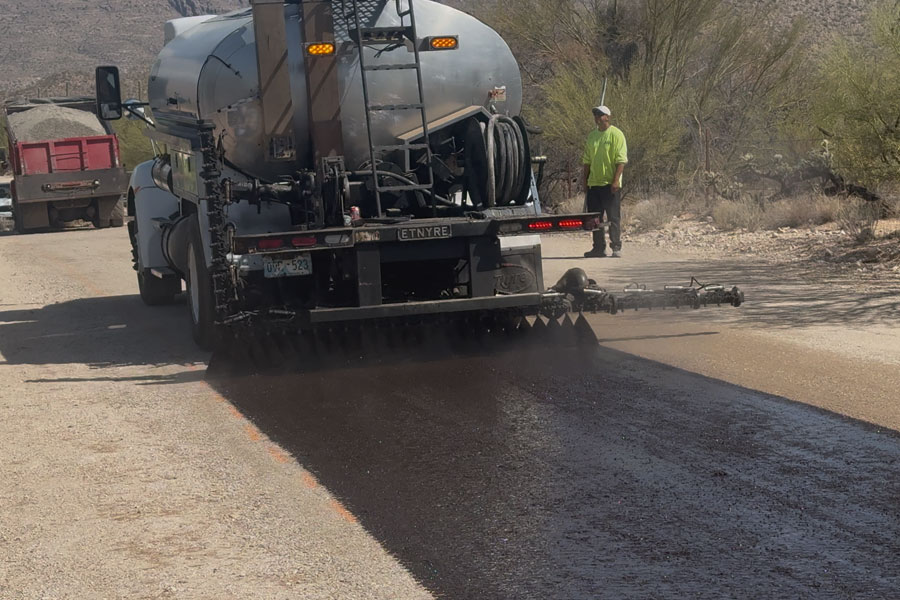
A suitable asphalt binder is distributed across the prepared surface.
Depending on the project, the material may be an asphalt emulsion or another specified binder. Proper application rates are important because the binder must hold the aggregate securely without excessive material collecting on the surface.
3. Aggregate Spreading
Crushed stone aggregate is distributed over the binder.
Aggregate size, cleanliness, shape, and compatibility with the binder influence the finished surface’s appearance and performance.
4. Rolling and Compaction
The aggregate is rolled into the binder using appropriate equipment.
This step helps embed the stone and establish a consistent wearing surface.
5. Setting, Sweeping, and Opening to Traffic
After application, the binder must develop sufficient strength to retain the aggregate. Loose excess stone may need to be swept away.
Some initial loose aggregate is normal. The contractor should explain when vehicles can safely use the driveway and whether temporary precautions are necessary.
Installation conditions matter. Arizona’s temperatures, weather, and the selected materials affect scheduling and application requirements.
What Are the Benefits of a Chip Seal Driveway?
Chip sealing offers several advantages for suitable residential properties, particularly when homeowners want a finished paved surface without necessarily choosing full-depth hot-mix asphalt construction.
A Textured, Natural Appearance
One of the most recognizable benefits of chip seal paving is its stone-based finish.
The visible aggregate creates a more rustic appearance than conventional black asphalt, making it an attractive option for some desert landscapes, larger properties, and rural homes.
Potential Cost Savings
Chip sealing can be less expensive than certain conventional asphalt paving or resurfacing projects, especially when an existing surface or properly prepared base can be used.
However, savings depend on the amount of preparation required, aggregate selection, driveway size, and other project conditions.
If extensive grading, drainage improvements, or reconstruction are necessary, the overall cost may change significantly.
Surface Protection
When installed on suitable pavement, chip sealing can help protect the existing surface from moisture intrusion and weathering.
This can be particularly valuable for asphalt exposed to Arizona’s intense sunlight and seasonal rainfall.
Improved Surface Texture
The exposed stone aggregate creates a textured driving surface.
This may provide useful traction characteristics, although performance depends on aggregate properties, surface condition, and proper installation.
Practical for Long Driveways and Private Roads
Long residential access roads and rural driveways are among the situations where chip sealing may be worth evaluating.
A properly designed installation can provide a more finished, cohesive surface than loose gravel while offering a different appearance and cost structure from traditional asphalt paving.
What Are the Limitations of Chip Seal Driveways?
Before choosing a chipseal driveway, homeowners should understand its limitations.
A chip seal surface is not as smooth as traditional hot-mix asphalt. Its stone texture may be less comfortable for activities requiring a smooth surface, such as skateboarding, roller skating, or using certain small-wheeled equipment.
Additional considerations include:
- Loose aggregate: Some stone loss can occur after installation, particularly during the initial settling period.
- Surface texture: The finish is visibly and physically rougher than conventional asphalt.
- Existing damage: Chip sealing cannot repair a failing base, severe depressions, or major structural cracking.
- Maintenance: The surface still needs inspections and occasional attention to damaged areas.
- Project suitability: Driveway slope, drainage, turning movements, traffic, and surface expectations can affect whether chip sealing is appropriate.
These considerations do not necessarily make chip sealing a poor choice. They help determine whether its characteristics match the property’s needs.
Chip Seal vs. Asphalt Driveway: Which Is Better?
Chip sealing and traditional asphalt paving can both be suitable for residential driveways, but they provide different finishes and may serve different project requirements.
| Feature | Chip Seal | Traditional Asphalt |
|---|---|---|
| Surface appearance | Textured, visible stone | Smoother, generally dark and uniform |
| Installation | Separate binder and aggregate applications | Compacted hot-mix asphalt |
| Cost | Can be economical on suitable projects | Depends on thickness, base preparation, and project scope |
| Surface feel | Rougher, aggregate-based finish | Generally smoother |
| Common applications | Suitable driveways, private roads, pavement preservation | New driveways, replacement, overlays, and access areas |
| Structural support | Requires a suitable existing surface or prepared base | Requires an appropriately designed and prepared base |
For a property with a suitable foundation and a preference for a textured stone finish, chip sealing may be worth considering.
For homeowners who prefer a smoother surface or require substantial pavement reconstruction, traditional asphalt paving may be more appropriate.
To learn more about installation and replacement options, visit our residential driveway paving services.
Chip Seal vs. Asphalt Sealcoating
Despite their similar names, chip sealing and sealcoating are not the same treatment.
Chip sealing uses an asphalt binder and stone aggregate to create a new textured wearing surface.
Asphalt sealcoating applies a protective coating over suitable existing asphalt to help reduce surface deterioration and improve its appearance.
Sealcoating does not add the same stone aggregate layer and is not a substitute for structural repairs.
A homeowner with pavement in relatively good condition may benefit from sealcoating, while chip sealing may be appropriate for different surface conditions or project objectives.
The correct choice depends on the driveway’s existing construction, age, wear, and desired finish.
Learn more about asphalt sealcoating and its applications.
How Much Does a Chip Seal Driveway Cost?
The cost of a chip seal driveway depends on several factors. Because properties vary considerably, a reliable estimate should be based on the actual driveway rather than a generic price per square foot.
Driveway Size and Layout
The total surface area influences the amount of binder, aggregate, labor, and equipment time required.
Long access roads, curves, and irregular layouts may involve different preparation and application requirements.
Existing Surface Condition
A driveway with a suitable existing surface may require less preparation than one with significant cracking, drainage problems, or an unstable base.
Projects involving removal, grading, compaction, or substantial repairs generally require additional work.
Aggregate Selection
The type, size, availability, and desired appearance of the stone aggregate can influence material costs.
Property Access and Equipment Requirements
Driveways with limited access, steep grades, or unusual layouts may require additional planning.
Drainage and Site Preparation
Correcting drainage or preparing an unsuitable foundation can be a significant part of the project.
For these reasons, comparing chip sealing with asphalt paving requires looking at the complete scope of work, not just the surface treatment.
A professional estimate should identify the preparation required and the type of surface being proposed.
Can You Choose Different Chip Seal Driveway Colors?
The visible stone aggregate plays an important role in the finished appearance of a chip seal driveway.
Depending on locally available materials and project specifications, different aggregate colors or shades may be possible.
Some finishes may blend more naturally with Southwestern landscapes, while others provide a darker or more uniform appearance.
However, the final color depends on the selected aggregate, binder, construction method, and how the surface changes with use and weathering.
If appearance is a priority, ask your contractor about available aggregate options and examples of completed projects.
APS offers chip seal paving options for Arizona properties and can discuss which finishes may be suitable for a particular project.
How Long Does a Chip Seal Driveway Last?
There is no single lifespan that applies to every chip seal driveway.
Performance depends on the quality of the underlying pavement or base, materials, installation, vehicle traffic, drainage, weather exposure, and ongoing maintenance.
A chip seal applied over a deteriorating or unstable foundation may experience problems sooner than one installed over a sound, properly prepared surface.
Homeowners should therefore avoid choosing a treatment based solely on a promised number of years.
A professional evaluation can help establish realistic expectations for the proposed installation.
How Do You Maintain a Chip Seal Driveway?
Chip seal surfaces require routine care, even when they are performing well.
Important maintenance practices include:
- Monitor loose aggregate. Some initial stone loss may occur, but continued or excessive loss should be evaluated.
- Keep drainage clear. Remove sediment and debris that obstruct water flow.
- Inspect after major storms. Check for erosion, damaged edges, standing water, or surface deterioration.
- Address localized damage. Small problems should be evaluated before they spread.
- Avoid unnecessary concentrated loads. Heavy equipment or repeated turning on vulnerable areas may contribute to wear.
- Follow installation guidance. Observe the contractor’s recommendations for initial traffic and ongoing care.
Chip sealing does not eliminate the need for pavement maintenance. Periodic inspections help determine when further treatment or repairs may be appropriate.
Is a Chip Seal Driveway Right for Your Arizona Property?
Chip sealing may be a good option when a homeowner wants a textured paved surface and the property’s existing conditions are suitable.
It can be particularly worth evaluating for longer residential driveways, rural access routes, and private roads.
However, asphalt paving or another solution may be more appropriate when the project requires substantial reconstruction, a smoother finish, or specific load-bearing characteristics.
Before making a decision, consider the driveway’s current condition, traffic, slope, drainage, desired appearance, and overall project budget.
Frequently Asked Questions About Chip Seal Driveways
Is a chip seal driveway cheaper than asphalt?
It can be, depending on the size of the project and the amount of preparation required. Chip sealing may offer cost advantages on suitable surfaces, but projects requiring extensive base reconstruction or drainage improvements can have significantly different costs.
Can you chip seal over an existing asphalt driveway?
Yes, chip sealing is commonly used over suitable existing asphalt. However, cracks, potholes, drainage problems, and structural deterioration should be evaluated and addressed before application.
Can chip seal be installed over gravel?
Some chip seal applications can be constructed over properly prepared aggregate bases. However, loose gravel alone is not necessarily an adequate foundation. Base stability, drainage, compaction, and project design must be evaluated.
Does chip sealing make a driveway smooth?
No. Chip sealing creates a textured stone surface. Traditional hot-mix asphalt generally provides a smoother finish.
Is chip sealing the same as sealcoating?
No. Chip sealing uses asphalt binder and crushed stone aggregate, while conventional asphalt sealcoating applies a protective coating to suitable existing pavement. They are different treatments with different applications.
Is chip sealing suitable for Arizona’s climate?
Chip sealing is used in Arizona, but its suitability for a specific driveway depends on proper materials, installation conditions, foundation quality, traffic, and drainage. A contractor should evaluate the project before recommending it.
Explore Chip Seal Driveway Options With APS
Choosing a driveway surface involves more than comparing appearance and initial cost. The existing foundation, drainage, vehicle use, and long-term maintenance requirements all affect which paving solution makes sense.
APS Chip Sealing & Asphalt Paving provides residential chip sealing and asphalt paving services throughout Tucson, Phoenix, and surrounding Arizona communities.
If you’re considering a chip seal driveway, our team can evaluate the property and explain the available options.
Learn more about our professional chip sealing services or contact APS to request a free estimate.